
The Fascinating History of Houseplants: From Ancient Rome to Now
Today, houseplants are a common sight in homes, offices, coffee shops, and apartments around the world. From monsteras and pothos to orchids and succulents, indoor plants have become a staple of modern interior design. But the practice of bringing plants indoors is far older than many people realize.
The story of houseplants spans thousands of years and reflects changing ideas about beauty, status, science, health, and our relationship with nature.
The Earliest Indoor Plants
Humans have been growing plants in containers for thousands of years. Historical evidence suggests that ancient civilizations, including the Egyptians, Greeks, Romans, Chinese, and Indians, cultivated plants in pots and courtyards. The ancient Romans, in particular, kept potted plants and sometimes moved them indoors or into sheltered spaces during colder weather.
These early plant collections were often associated with wealth and prestige. Exotic plants demonstrated access to trade networks and specialized gardening knowledge. While indoor gardening as we know it today was limited by architecture and lighting, the desire to bring nature closer to daily life was already present.
The Rise of Conservatories and Exotic Plants
During the 17th and 18th centuries, European interest in botany expanded dramatically. Explorers, traders, and scientists brought unfamiliar plant species back from Asia, Africa, and the Americas. Wealthy households began constructing conservatories and greenhouses to protect these tropical and subtropical plants from colder climates.
As glassmaking technology improved, it became easier to create structures that allowed sunlight to reach delicate plants year-round. Botanical gardens flourished, and gardening publications became increasingly popular. Indoor plant cultivation was no longer limited to scientific institutions and aristocratic estates.
The Victorian Houseplant Boom
The 19th century marked a turning point in the history of houseplants.
During the Victorian era, indoor plants became a widespread cultural phenomenon in Britain and later the United States. Several factors helped fuel this trend. Advances in home heating, larger windows, and improvements in glass production created indoor environments where plants could survive more easily. At the same time, growing urbanization left many people with little outdoor gardening space.
One of the most important innovations was the Wardian case, invented in 1833 by British physician Nathaniel Bagshaw Ward. This glass enclosure protected plants during long sea voyages and dramatically increased the survival rate of tropical species transported around the world. As a result, a much wider variety of exotic plants became available to gardeners.
Ferns were so fashionable that the period developed a craze known as "pteridomania," or fern fever. Orchids, palms, and other tropical plants were prized possessions in Victorian parlors and conservatories.
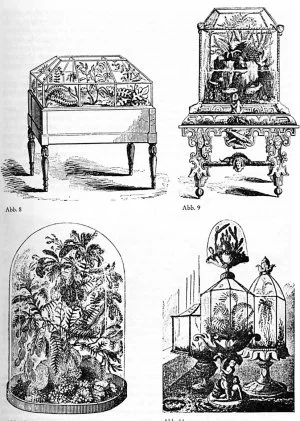
Examples of a Wardian Case
Houseplants in the 20th Century
By the early 1900s, some critics viewed the heavily decorated Victorian style as outdated. Simpler interior designs became fashionable, and many of the elaborate plant displays of the previous century disappeared. What comes around, goes around.
But, the 1970s brought another major surge in popularity. Hanging baskets, spider plants, pothos, and ferns became iconic elements of interior design. Houseplants were often associated with environmental awareness and a growing interest in connecting with nature. Macrame hangers, anyone?
The Modern Houseplant Revival
In recent years, houseplants have experienced another cultural renaissance, especially during the Covid lockdown.
Social media platforms have introduced millions of people to indoor gardening, with plant enthusiasts sharing care tips, propagation techniques, and home décor inspiration. Rare and unusual species have become highly sought after with high price tags! I don’t even want to think about all the money I have spent on rare plant cuttings.
Why We Still Love Houseplants
Although the styles and species have changed over the centuries, the appeal of houseplants remains consistent. Humans have long sought ways to bring the natural world closer to home. Whether displayed in a Roman villa, a Victorian parlor, or a modern apartment, plants offer a sense of calm, curiosity, and connection.
Sources: Catherine Horwood's Potted History, Potted History: How Houseplants Took Over Our Homes, Kew Royal Botanic Gardens, Royal Horticultural Society, On the Growth of Plants in Closely Glazed Cases